

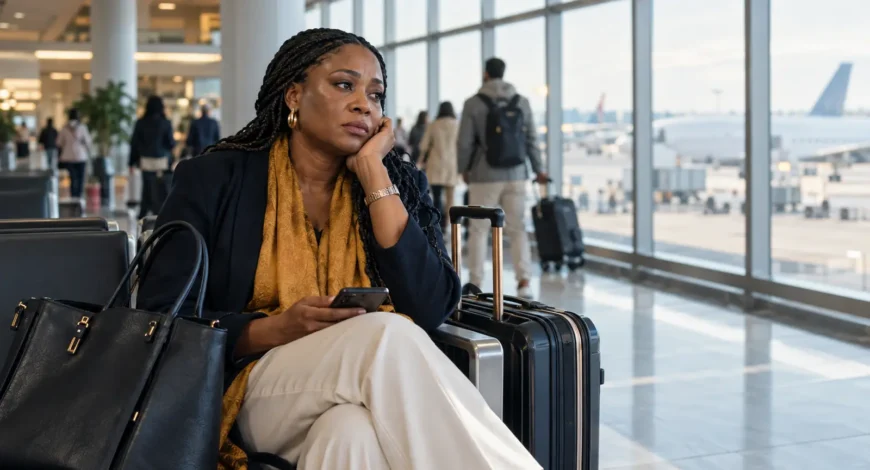
The Airport Photograph Does Not Show the Whole Story
The airport photograph is usually bright. There are suitcases, embraces and hopeful captions. Somebody writes, “A new chapter,” while friends add prayer hands and congratulations. The image freezes a moment of possibility, but it cannot show the full weight inside the luggage.
For many Nigerians, migration is discussed as an escape from one set of problems. What receives less attention is the second set waiting on the other side. Trapped Between Two Fears: The Letters I Was Afraid to Send explores this hidden tension: leaving may create opportunity, yet opportunity does not automatically create belonging.
The pressure to make departure look successful
Once someone relocates, people at home often imagine that the hardest part is over. The currency looks stronger. The roads appear cleaner. Electricity is reliable. Photographs show order. Even genuine progress can create a performance the migrant feels required to maintain.
How do you admit loneliness when relatives believe you have reached the promised land? How do you describe a job that drains you when its salary converts impressively into naira? How do you say that your immigration status keeps you awake when everyone is celebrating the visa that took you there?
Many people edit their reality before calling home. They stand in the neat corner of a difficult life. They discuss achievements and remove the fear. This is not necessarily dishonesty; sometimes it is protection. They do not want parents to worry or critics to say, “We warned you.” But the silence can make isolation heavier.
A legal status can become an emotional condition
Immigration language sounds administrative: permit, renewal, sponsorship, eligibility, expiry. In a person’s life, those words can shape everything. A delayed document may affect work, housing, travel and the ability to see family. A job is no longer only a job when losing it may threaten the right to remain.
This uncertainty enters the body. Emails from immigration offices are opened with a racing heart. News about changing policies becomes personal. Plans are made cautiously because next year may depend on a decision made by someone who has never met you. The future can feel both promising and borrowed.
Even people with secure status may carry memories of the unstable years. They remember measuring every choice against paperwork. Stability eventually arrives, but the habit of fear can remain.
Belonging can be conditional
Living abroad can mean constantly reading a room. Is the joke harmless, or is it about your accent? Was the opportunity given to someone else because they were better suited, or because their name felt more familiar? Should you correct the pronunciation again, or make yourself easier to accommodate?
Racism is not always dramatic enough to record. Sometimes it is a series of small reminders that acceptance has conditions. You may be welcomed for your work but misunderstood as a person. You may be praised for adapting while slowly hiding the parts of yourself that require explanation.
Then you return to Nigeria and discover that home has also moved. Friends have built routines without you. Family members treat you as both insider and visitor. Prices surprise you. Your opinions are dismissed because “you people abroad do not understand.” The place you missed is real, but it is no longer frozen in the form you remember.
Children raised between countries may inherit the same question differently. They know Nigeria through food, stories, names and summer visits, yet may still be told they are not fully Nigerian. Abroad, they may also be reminded that they are not fully from there. Belonging becomes something they must negotiate.
Distance has a cost no transfer receipt shows
Money sent home can solve practical problems, but it cannot attend a funeral. It cannot sit beside a parent in a hospital. It cannot replace the ordinary days that build closeness. Migrants often become providers from a distance while grieving the fact that provision and presence are not the same thing.
The time difference also creates strange loneliness. Your difficult day begins when everyone at home is asleep. Their emergency arrives during your work meeting. Love must fit between schedules, data connections and rushed calls. A person can be surrounded by people and still miss being known without translation.
The photograph can be true and incomplete
None of this means migration is a mistake. The new chapter may contain safety, growth, friendship and genuine relief. The airport smile can be completely sincere. It is simply not the whole story.
Trapped Between Two Fears creates room for both truths. A person can be grateful to have left and heartbroken by what leaving cost. They can build a life abroad and still ache for home. They can love Nigeria and refuse to pretend that returning feels safe.
Perhaps the kindest thing we can do is stop demanding simple stories from people living complicated lives. Ask the friend abroad how they are really coping. Listen without comparing pain. Let them speak without accusing them of ingratitude. Behind the bright photograph may be a person who needs permission to tell the truth.
For more honest conversations about migration and belonging, join the Read With Olabisi community and meet the woman behind the words.

Previous Post
Where Do You Go When Both

Next Post